Author Archives: Marya E. Gates
Movie Quote of the Day – My Girl, 1991 (dir. Howard Zieff)
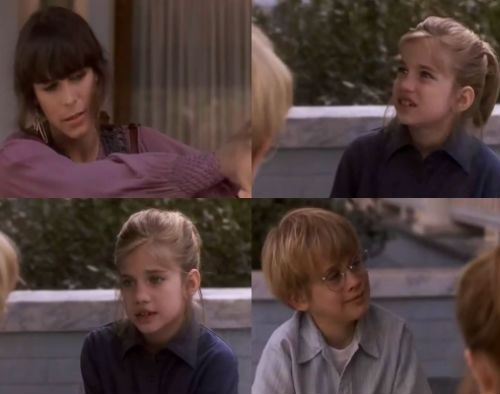
Shelly DeVoto: You know, Vada, you shouldn’t let those girls upset you.
Vada Margaret Sultenfuss: I’m not upset. I will never play with those girls. I only surround myself with people who I find intellectually stimulating.
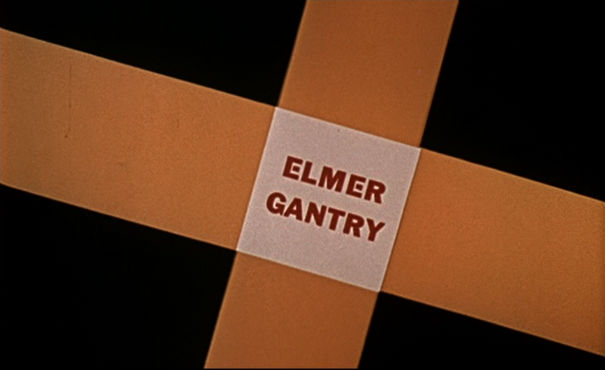
Oscar Vault Monday – Elmer Gantry, 1960 (dir. Richard Brooks)
This is an interesting film. It’s a satire, for sure. But I can’t help but think its satirical tone was probably lost on many a person when it first came out (and anyone who’s watched it since). That or it made them uncomfortable because it’s satirical about religion, but not in a Monty Python kind of way. Regardless, I thought it was fantastic. I think Richard Brooks is one of the great underrated directors of the transitional period from Old Hollywood to New Hollywood. The film was nominated for five Academy Awards, winning three: Best Score (Comedy or Drama), Best Adapted Screenplay (won), Best Supporting Actress Shirley Jones (won), Best Actor Burt Lancaster (won), Best Picture. The other films nominated for Best Picture that year were The Alamo, Sons and Lovers, The Sundowners and winner The Apartment.
Movie Quote of the Day – Three On A Match, 1932 (dir. Mervyn LeRoy)
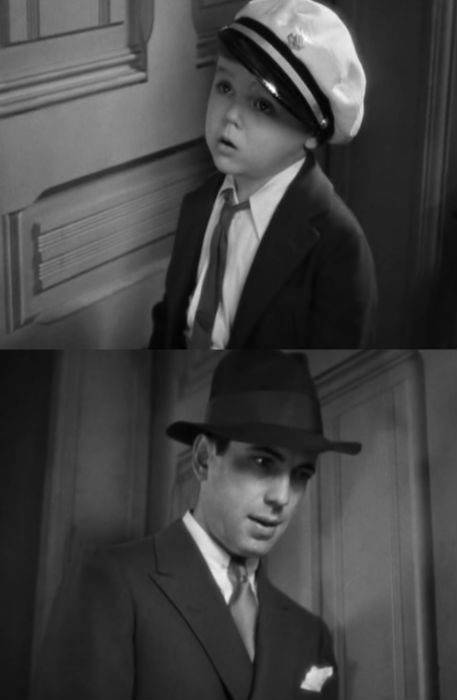
Junior: You mustn’t hurt my momma!
Harve: Okay. [mercilessly] I’ll bear that in mind.
It’s In My Nature, Reflections on Nicolas Winding Refn’s “Drive”
“Have you ever heard of the story of the scorpion and the frog?” the nameless Driver (Ryan Gosling) asks movie-producer-turned-mobster Bernie Rose (Albert Brooks) towards the end of Nicolas Winding Refn’s masterpiece Drive. In that one line, when you put it in context, you get everything you need to know about the character. Heck, he’s even wearing a jacket with a scorpion on it for 99% of the film.

There has been much said about the hyper-violence that punctuates Refn’s otherwise hypnotic drama. Some love it, some think it detracted from the story.
I happen to think Refn’s execution of the violence was pitch perfect and Gosling’s superb performance just reinforces the story’s message: you can’t escape your nature.
The Driver doesn’t think about his violent acts; he just does them. They’re part of his nature, the way he instinctually reacts to certain situations. Think Viggo Mortensen’s character in A History of Violence.
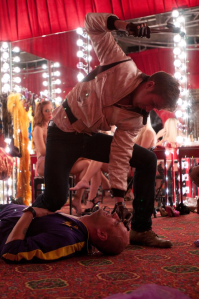
He’s clearly tried to repress them in his day-to-day life – hence his day job as a mechanic. He’s even tried to find other outlets for his violent nature (i.e. his other two jobs).
But he just can’t help it; it’s in his nature. And when these explosions of violence happen what’s most interesting is the look on the Driver’s face afterwards, especially in the elevator scene. He did what he had to do, but he’s both appalled that he did it and appalled that someone so dear to him had to witness it.

There’s another telling moment in the film that I really loved. When the Driver is talking to the son of Irene (Carey Mulligan) while the two watch cartoons. He asks if the shark in the cartoon is a bad guy and the son immediately says yes. The Driver asks him how can you tell? The son says he looks like a bad guy, plus have you ever seen a good shark?
I found that scene particularly fascinating because again the Driver is wrestling with his inner demons. He knows he is a violent man, he knows that he does illegal things; that he is, in some shape or form, a “bad guy.” Yet, you wouldn’t be able to tell that from looking at him.
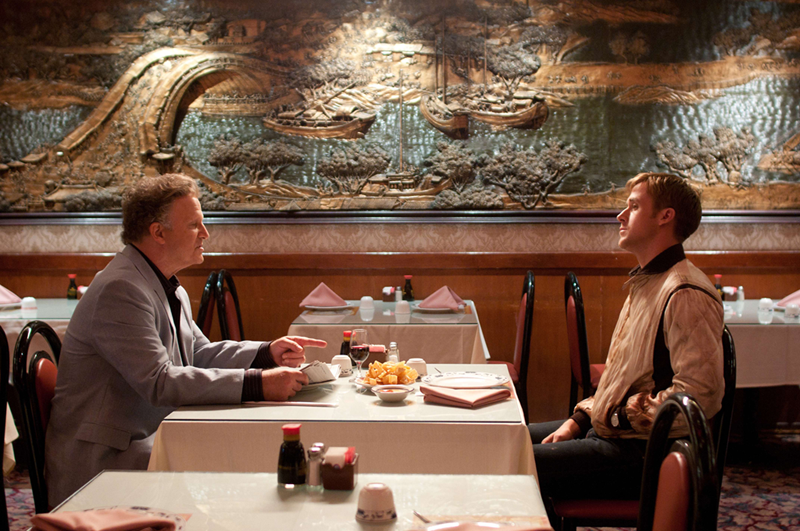
I also love when Gosling and Brooks face off at the end. Like the Driver, Brooks’ Bernie is a man who is violent by nature. This scene is like all the great showdowns in classic Westerns; only instead of guns the two exchange false promises, both knowing the other is figuring out just the right moment to strike. They’re both scorpions and neither one wants to let the other across the river.
While Gosling’s performance may be too subtle for Awards Season, I’m thinking Brooks’ performance won’t be forgotten – Hollywood loves to “rediscover” someone, especially in a bravado performance that is so completely against type.
The last thing I wanted to mention is how much I love all the attention to detail that Refn put into this film. He won Best Director at the Cannes film festival in May, and rightfully so.

There’s this amazing color story throughout the film. Mostly in shades of teal blue and this sort of golden amber color. Everything from the streetlights to the bedspread in a motel fit into this color scheme. As the film progresses and the violence increases the amber begins to turn into this darker red color. It’s just fucking brilliant.
I’ve seen this film in theaters three times now and I still want to see it again. and again. and again. It’s everything I want in a film. If it’s playing near you, I urge you to go and give it a chance yourself.
Movie Quote of the Day – The Lady Eve, 1941 (dir. Preston Sturges)
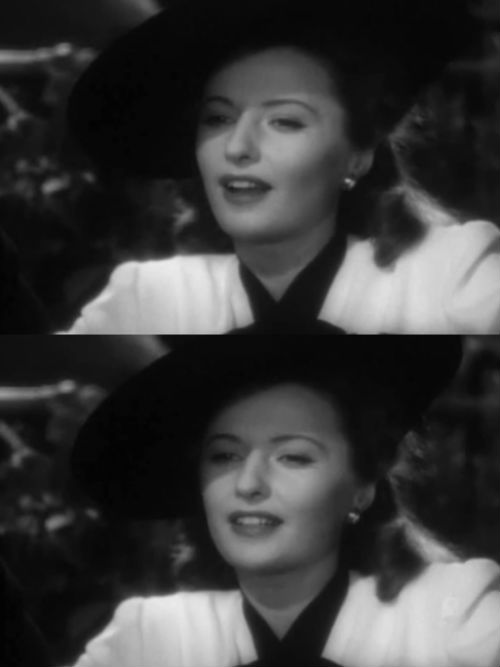
Jean Harrington: I need him like the axe needs the turkey.
Movie Quote of the Day – Road To Perdition, 2002 (dir. Sam Mendes)
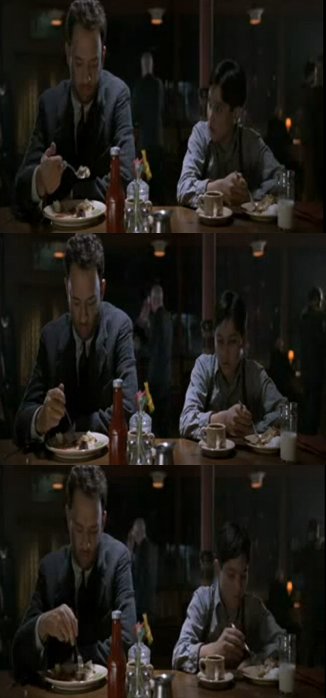
Michael Sullivan, Jr.: So when do I get my share of the money?
Michael Sullivan: Well… how much do you want?
Michael Sullivan, Jr.: Two hundred dollars.
Michael Sullivan: Okay. Deal.
[beat]
Michael Sullivan, Jr.: Could I have had more?
Michael Sullivan: You’ll never know.
Movie Quote of the Day – Catch Me If You Can, 2002 (dir. Steven Spielberg)
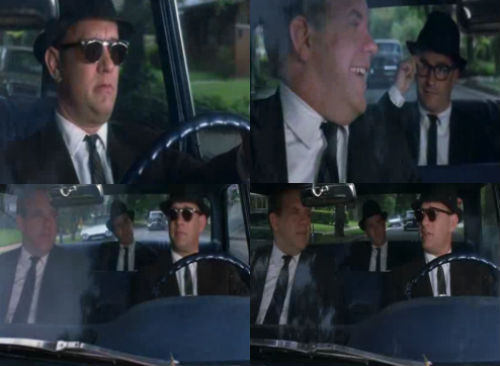
Carl Hanratty: Well, would you like to hear me tell a joke?
Earl Amdursky: Yeah. Yeah, we’d love to hear a joke from you.
Carl Hanratty: Knock knock.
Earl Amdursky: Who’s there?
Carl Hanratty: Go fuck yourselves.
Movie Quote of the Day – The Social Network, 2010 (dir. David Fincher)

Cameron Winklevoss: What, do you want to hire an IP lawyer and sue him?
Divya Narendra: No, I want to hire the Sopranos to beat the shit out of him with a hammer!
Tyler Winklevoss: We don’t even have to do that.
Cameron Winklevoss: That’s right.
Tyler Winklevoss: We can do that ourselves. I’m 6’5″, 220, and there’s two of me.
AMPAS puts new limits on pre-Oscar campaigning
Oscar is clamping down on awards campaigning.
The Academy of Motion Picture Arts and Sciences announced new regulations Wednesday to curtail campaigning for the 84th annual Academy Awards. The new rules eliminate star-studded receptions for films and individual nominees after the Oscar nominations have been announced on Jan. 24, 2012.
There are no restrictions on screenings, receptions or filmmaker panel discussions prior to the nominations announcement, but once the nominees are known, receptions will not be allowed and no individual from any film can participate in more than two panel discussions.
Academy members and Oscar nominees are also prohibited from attending any non-screening events that promote or honor a nominated film or individual after the nominations announcement, but they’ll still be allowed to attend academy-sanctioned events and those held by various guilds and critics groups.
The run-up to the Academy Awards is typically crowded with countless parties and events aimed at courting awards voters. Earlier this year, parties for “The Social Network” and “The King’s Speech” each featured the casts of those films.
The new rules also extend the organization’s ban on negative campaigning to social media, and sets new penalties for violations. Members who break the rules will be subject to a one-year-suspension for their first infraction and possible expulsion for subsequent violations.
The regulations also allow for digital distribution of films to academy members, though academy president Tom Sherak says, “above all, we want academy members to see movies as they were meant to be seen, in a theatrical setting.”
The 84th annual Academy Awards will be presented Feb. 26, 2012.
[source]
Movie Quote of the Day – The Women, 1939 (dir. George Cukor)
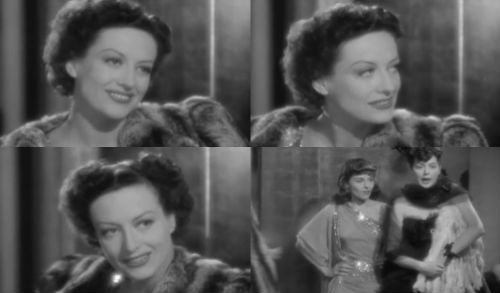
Crystal Allen: There’s a name for you, ladies, but it isn’t used in high society. . .outside of a kennel.















 the diary of a film history fanatic