Blog Archives
Oscar Vault Monday – Dead End, 1937 (dir. William Wyler)
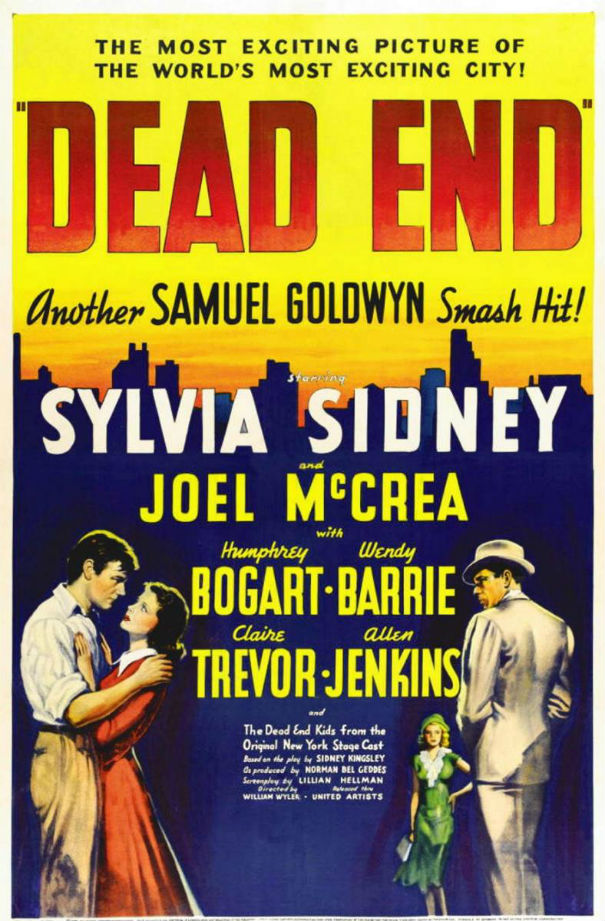
Continuing with Noirvember, I decided to write about a proto-noir, William Wyler’s Dead End. This is a fabulous example of crime cinema, coming at the end of the thirties and a wave of films like Scarface and The Petrified Forest. Dead End takes a look at the life of several residents who live in tenements located below luxury apartments built for the view of the picturesque East River. The film was nominated for four Academy Awards, though it didn’t win any: Best Art Direction, Best Cinematography, Best Supporting Actress Claire Trevor and Best Picture. The other films nominated for Best Picture that year were The Awful Truth, Captains Courageous, The Good Earth, In Old Chicago, Lost Horizon, One Hundred Men and a Girl, Stage Door, A Star Is Born and winner The Life of Emile Zola.
Movie Quote of the Day – Make Way For Tomorrow, 1937 (dir. Leo McCarey)
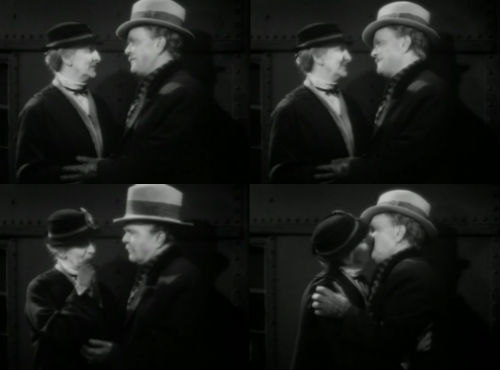
Barkley Cooper: In case. . .I don’t see you again. . .
Lucy Cooper: What?
Barkley Cooper: Well, anything might happen. The train could jump off the tracks. If it should happen that I don’t see you again, it’s been very nice knowing you, Miss Breckenridge.
Lucy Cooper: Bark, that’s probably the prettiest speech you ever made. And in case I don’t see you ag. . .well, for a little while. I just want to tell you, it’s been lovely, every bit of it, the whole fifty years. I’d sooner have been your wife, Bark, than anyone else on Earth.
Barkley Cooper: Thank you, Lucy.
Movie Quote of the Day – Personal Property, 1937 (dir. W.S. Van Dyke )
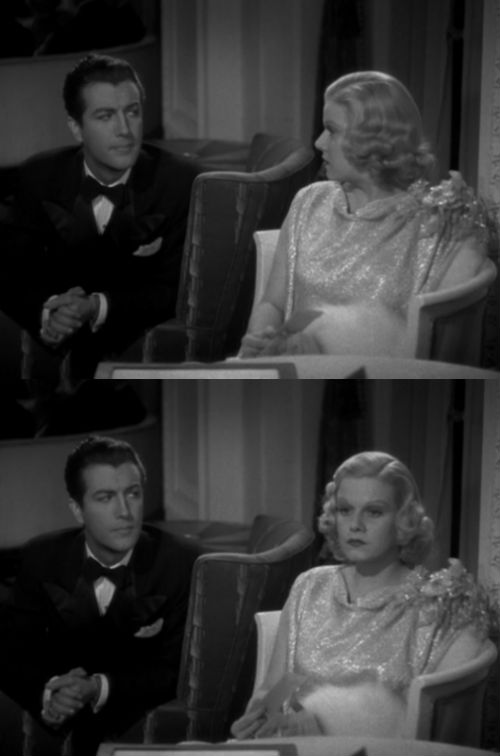
Raymond Dabney: Your face seems strangely familiar to me.
Crystal Wetherby: So do your manners.
Movie Quote of the Day – Easy Living, 1937 (dir. Mitchell Leisen)
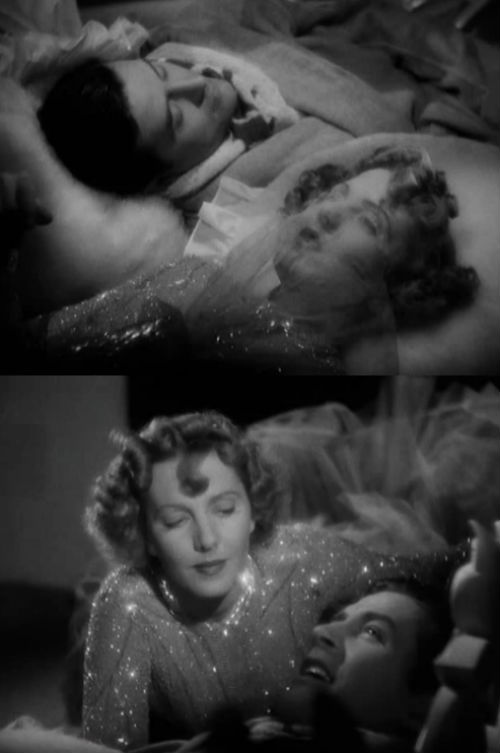
Mary Smith: Didn’t you study to be anything?
John Ball Jr.: Anything like what?
Mary Smith: Oh, like a dentist or something?
John Ball Jr.: Uh-uh.
Mary Smith: Well, how did you expect to while away the hours after you grew up?
John Ball Jr.: I didn’t have to study to do that. In training, I’ve whiled away an hour in 26 minutes flat. Oh course, I’ve always had the dream I could do it in 25, but. . .
Movie Quote of the Day – It’s Love I’m After, 1937 (dir. Archie Mayo)

Marcia West: I was in love with Clark Gable last year and if I can get over him, it’s a cinch I can get over you.
Basil Underwood: Who’s Clark Gable?
Oscar Vault Monday – A Star Is Born, 1937 (dir. William A. Wellman)
The original version of the twice re-made A Star is Born (though, the plot quite resembles 1932’s What Price Hollywood?), is quite wonderful. Perhaps not as memorable as the George Cukor/Judy Garland 1954 musical adaptation, the 1937 version is miles and miles better than the mediocre 1976 Barbra Streisand version. It’s also in the public domain, so it’s available to watch for free in various quality all over the internet. The film was nominated for seven Academy Awards, winning one: Best Writing Original Story (won), Best Writing Screenplay, Best Actor, Best Actress, Best Assistant Director, Best Director, Best Picture. W. Howard Greene was rewarded an honorary plaque for the color photography of the film, an award that was “recommended by a committee of leading cinematographers after viewing all the color pictures made during the year”. The other films up for Best Picture that year were: The Awful Truth, Captains Courageous, Dead End, The Good Earth, In Old Chicago, Lost Horizon, One Hundred Men and a Girl, Stage Door and winner The Life of Emile Zola.

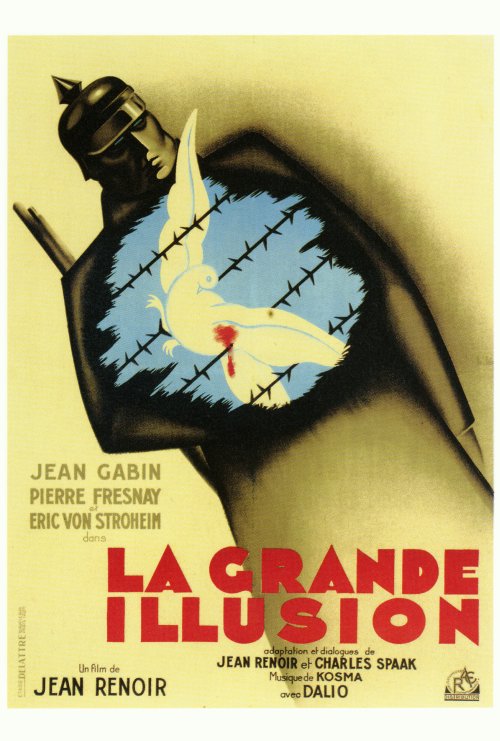
Oscar Vault Monday – La Grande Illusion, 1937 (dir. Jean Renoir)
I first saw this in college for a class called “Coffee and Cigarettes: The Literature of Anxiety and Boredom” (yes, that’s really the official title of that class). I think we watched it to examine the situation the officers in the film find themselves in: a prisoner of war camp. They’re all educated men, all men who are doers, and suddenly they can’t do anything. At least I think that’s why we watched, I don’t recall much discussion after watching the film. Whatever the reason was, I’m glad we watched it; it’s a fabulous film, filled with amazing performances. It’s also one of the very first anti-war war films, a genre I tend to really love. It was the first foreign language film to be nominated for Best Picture and one of only eight to do so: La Grande Illusion (French, 1938); Z (French, 1969); The Emigrants (Swedish, 1972); Cries and Whispers (Swedish, 1973); Il Postino (Italian/Spanish, 1995); Life Is Beautiful (Italian, 1998); Crouching Tiger, Hidden Dragon (Mandarin Chinese, 2000); and Letters from Iwo Jima (Japanese, 2006). It was up against nine films the year it was nominated: Alexander’s Ragtime Band, Boys Town, Four Daughters, Jezebel, Pygmalion, Test Pilot, The Adventures of Robin Hood, The Citadel and winner You Can’t Take It with You.














 the diary of a film history fanatic