Category Archives: Oscar Vault Monday
Oscar Vault Monday – The Elephant Man, 1980 (dir. David Lynch)
After Eraserhead, Lynch was eager to get started on a new project. After failing to get anything started on a personal project called Ronnie Rocket, he called Stuart Cornfeld – who had earlier called him to tell him how much he had enjoyed Eraserhead – and asked him if he had anything. Cornfeld said he had four projects. The first one he mentioned was called The Elephant Man; without knowing anything else Lynch said that was it. They pitched it around to several studios before Mel Brooks (for whom Cornfeld worked) decided (with some influence by his wife Anne Bancroft) it was right for his new BrooksFilms production company. He liked the screenwriters, but he didn’t know who Lynch was, so they screened Eraserhead for him. After it was over Brooks reportedly said to Lynch, “You’re a madman! I love you! You’re in!” The rest, as they say, is history. The film was nominated for eight Academy Awards, though it didn’t win any: Best Original Score, Best Art Direction, Best Film Editing, Best Costume Design, Best Adapted Screenplay, Best Actor John Hurt, Best Director and Best Picture. Lynch was saddened that the film didn’t receive sound or cinematography nominations. The year prior, sound designer Alan Splet received an honorary award for his sound work on The Black Stallion and a few years later he received a nomination for his work on 1983’s Never Cry Wolf. Cinematographer Freddie Francis won in 1960 for Sons and Lovers and in 1989 for Glory. The other films nominated for Best Picture that year were: Coal Miner’s Daughter, Raging Bull, Tess and winner Ordinary People. After the film’s loss at the Oscars, Brooks reportedly stated, “Ten years from now Ordinary People will be the answer to a trivia question. The Elephant Man will be a movie people are watching.” The film currently sits at #116 on IMDb’s user-generated Top 250.

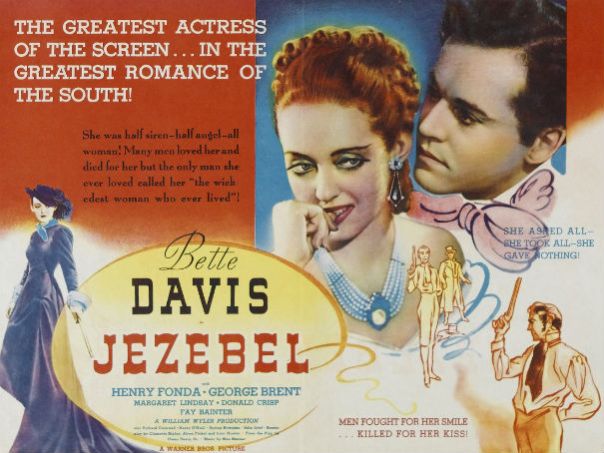
Oscar Vault Monday – Jezebel, 1938 (dir. William Wyler)
I really love this film. I have watched it many times. It’s one that gets richer each time you watch it. Often, you hear it dismissed, or at least introduced, as Bette Davis’s Gone With The Wind, but it is definitely more than just a consolation prize. This film represents a turning point in Davis’s career and it was after her phenomenal turn in this film that she became the superstar we now know and love. The film was nominated for five Academy Award, won two: Best Cinematography, Best Score, Best Supporting Actress Fay Bainter (won), Best Actress Bette Davis (won), Best Picture. The other films nominated for Best Picture that year were The Adventures of Robin Hood, Alexander’s Ragtime Band, Boys Town, The Citadel, Four Daughters, La Grande Illusion, Pygmalion, Test Pilot, and winner You Can’t Take It With You. I have actually seen all of these films, and they are ALL fantastic.
Oscar Vault Monday – Witness for the Prosecution, 1957 (dir. Billy Wilder)
Like Stanley Donen’s Charade, Witness For The Prosecution is often misremembered as an Alfred Hitchcock films. While the subject matter on paper sounds like a Hitchcock film, the resulting film is most definitely a Billy Wilder film. Since the film came at the end of the Film Noir era I thought it would be a perfect way to end Noirvember. Witness For the Prosecution is not a full-on noir like Wilder’s Sunset Blvd., Double Indemnity or Ace in the Hole, but it definitely borrows from those films. It’s got a wonderful twist ending that I, for once, will not spoil. After the film ends there’s a disclaimer that runs during the credits. A voice-over announces:
“The management of this theatre suggests that for the greater entertainment of your friends who have not yet seen the picture, you will not divulge, to anyone, the secret of the ending ofWitness for the Prosecution.”
So I’ll follow the producer’s wishes. Currently, this film is available on instant Netflix, so you can watch it right away if you want!. Witness For The Prosecution was nominated for five Academy Award, though it didn’t win any: Best Sound, Best Film Editing, Best Supporting Actress Elsa Lanchester, Best Actor Charles Laughton, Best Director and Best Picture. The other films nominated for Best Picture were Sayonara, Peyton Place, 12 Angry Men and winner The Bridge on the River Kwai.

Oscar Vault Monday – Crossfire, 1947 (dir. Edward Dmytryk)
As we continue with Noirvember, I bring one of my favorites from the era, Edward Dmytryk’s Crossfire. I read one critic who said it is more of a “message film” than a film noir and I think that is kind of a ridiculous statement, as it assumes the two are mutually exclusive. If you’ve seen The Celluloid Closet, then you know that originally the crime in this film was perpetrated out of homophobia, rather than anti-Semitism. Under the Hays Code, clearcut mention of homosexuality was prohibited because it was consider “sexual perversion.” I’m going to write a little more about the origins of the film after the cut. Crossfire was nominated for five Academy Awards, though it didn’t win any: Best Adapted Screenplay, Best Supporting Actor Robert Ryan, Best Supporting Actress Gloria Grahame, Best Director and Best Picture. The other films nominated for Best picture that year were The Bishop’s Wife, Great Expectations, Miracle on 34th Street and winner Gentleman’s Agreement (which is also about anti-Semitism). Crossfire was one of the twenty highest-grossing films of 1947, along with three other noirs: Body and Soul, Possessed and Dark Passage.

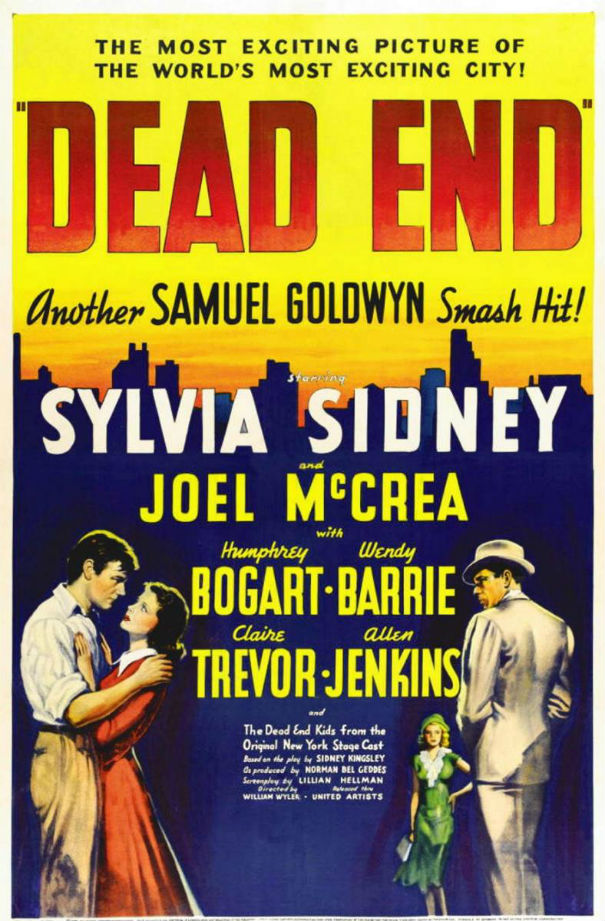
Oscar Vault Monday – Dead End, 1937 (dir. William Wyler)
Continuing with Noirvember, I decided to write about a proto-noir, William Wyler’s Dead End. This is a fabulous example of crime cinema, coming at the end of the thirties and a wave of films like Scarface and The Petrified Forest. Dead End takes a look at the life of several residents who live in tenements located below luxury apartments built for the view of the picturesque East River. The film was nominated for four Academy Awards, though it didn’t win any: Best Art Direction, Best Cinematography, Best Supporting Actress Claire Trevor and Best Picture. The other films nominated for Best Picture that year were The Awful Truth, Captains Courageous, The Good Earth, In Old Chicago, Lost Horizon, One Hundred Men and a Girl, Stage Door, A Star Is Born and winner The Life of Emile Zola.
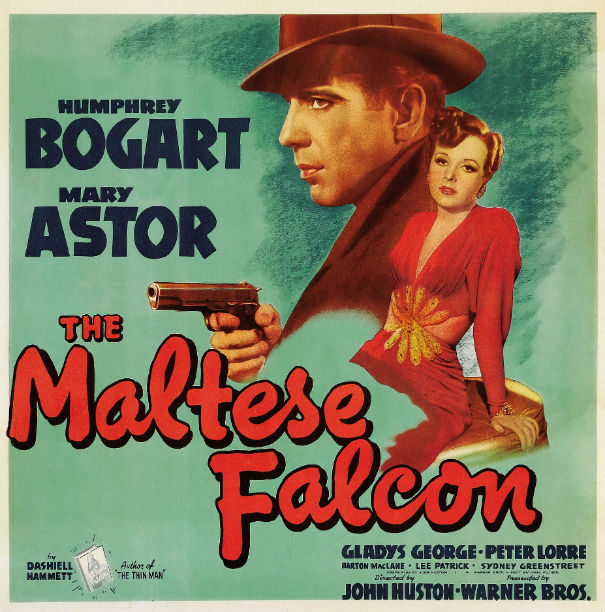
Oscar Vault Monday – The Maltese Falcon, 1941 (dir. John Huston)
I thought it would be fitting to start Noirvember with a discussion of John Huston’s iconic adaptation of Dashiell Hammett’s The Maltese Falcon. Although film noir, a term coined in 1946 by French film critic Nino Frank, is often thought of as an post-war era in American cinema (many neo-noir and foreign films would later emulate these original films), this film has been cited as the first true American Film Noir. There’s a great debate about when the era starts and whether it counts as a genre (I don’t believe in genres period, so you can probably guess where I stand on that issue). A lot of the early crime films in the thirties and the silents made during German Expressionism all led to the style and topics seen in the noir films, but for me I think the films made during this era were distinctly full of post-war angst. That said, I’ll admit if The Maltese Falcon isn’t the first true noir, it’s definitely the premiere proto-noir. The film essentially launched Humphrey Bogart as a leading man, following his explosive earlier that year in Raoul Walsh’s High Sierra, in a performance that set the tone for all of noir’s anti-hero heroes to come. The film was nominated for three Academy Awards, though it didn’t win any: Best Adapted Screenplay, Best Supporting Actor Sydney Greenstreet and Best Picture. The other films nominated that year were: Blossoms in the Dust, Citizen Kane, Here Comes Mr. Jordan, Hold Back the Dawn, The Little Foxes, One Foot in Heaven, Sergeant York (co-written by John Huston), Suspicion and winner How Green Was My Valley.
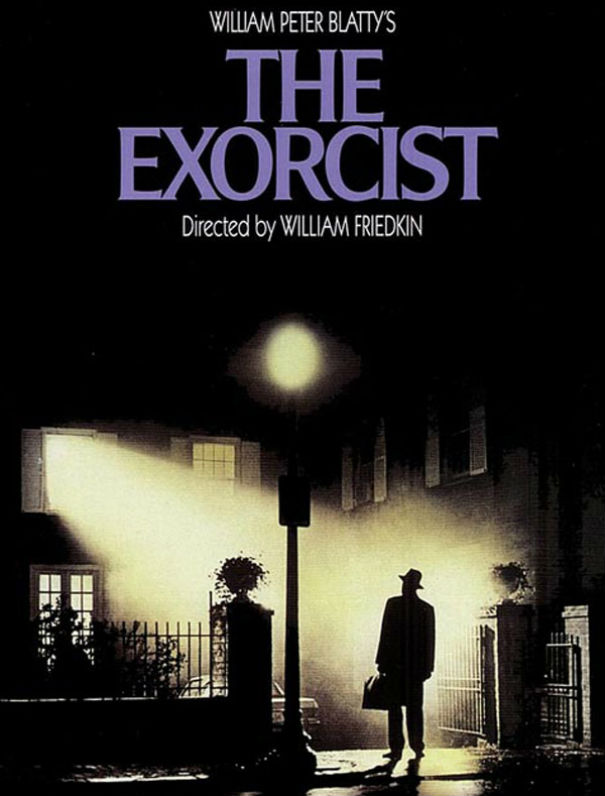
Oscar Vault Monday – The Exorcist, 1973 (dir. William Friedkin)
My mother wouldn’t let me see this movie when I was a kid. She did, however, give the local rental store permission to allow me to rent rated R films. This was mostly for action pictures and such. One time, when I was about twelve years old, I went to the rental store with my friend Tiffany to rent movies for her birthday party and we all wanted to see The Exorcist, but it was rated R. Needless to say, I rented it for her. We watched it. It scared the shit out of us. My mother found out that I rented it and was very angry. That was my first experience with the movie. I didn’t see it again until I was 18 and I went to see it as a midnight movie the night before Halloween. That was one of the worst decisions I ever made in college. So many nightmare that night. I’d only seen it those two times, so I decided to rewatch it again in order to write about it now. After the cut are my thoughts. The film became the first horror film to be nominated for Best Picture, racking up 10 Academy Award nominations, winning two: Best Sound (won), Best Cinematography, Best Art Direction, Best Film Editing, Best Adapted Screenplay (won), Best Supporting Actor Jason Miller, Best Supporting Actress Linda Blair, Best Actress Ellen Burstyn, Best Director William Friedkin and Best Picture. The other films nominated for Best Picture that year were: American Graffiti, Cries and Whispers, A Touch of Class and winner The Sting.
Oscar Vault Monday – Love Story, 1970 (dir. Arthur Hiller)
Often cited as one of the films that started the “Paramount Renaissance” in the 1970s, Love Story was nothing short of a phenomenon when it was released. Erich Segal, who wrote the screenplay, was asked by Paramount to write a novelization of the film in to create pre-publicity; it became a best seller. I have a sort of love/hate relationship with this film. Mostly this is because I think it is really poorly written. I hate the characters. I don’t think they are really developed at all. But, I love the art direction and the cinematography and most of the performances. As I was watching it, I felt like it was this perfectly crafted film wasted on a mediocre screenplay and that just feels like a shame to me. Love Story was nominated for seven Academy Awards, winning one: Best Original Score (won), Best Original Screenplay, Best Supporting Actor John Marley, Best Actor Ryan O’Neal, Best Actress in a Leading Role Ali MacGraw, Best Director and Best Picture. The other films nominated for Best Picture that year were: Airport, Five Easy Pieces, MASH and winner Patton.

Oscar Vault Monday – Gaslight, 1944 (dir. George Cukor)
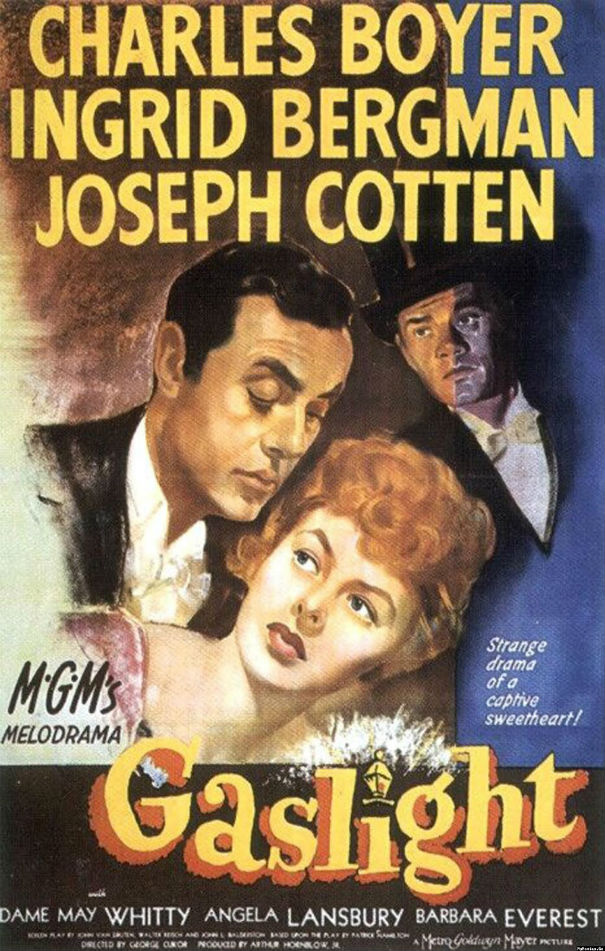
God I love this film. I first saw it during Summer Under the Stars in 2010 at about 2 in the morning after having watched five other Bergman films that day. I think I must have dosed off during it because a few months later when I fell really hard for Joseph Cotten and was looking at his filmography, I saw he was one of the co-stars and I didn’t remember his character at all! Luckily, at the TCM Film Festival in 2011, I got a second chance to see the film, this time on the gigantic screen at the Chinese Theater. During that day I had seen two other Cotten films on the big screen (Citizen Kane and Niagara), so I was on a bit of a Cotten high. What a great day that was. And what a great film, too! I now own it (thank you very much Warner Archive!) and have watched it several times. I would be lying if I told you the following look at the film is going to go pretty heavy into Jo Cotten’s wardrobe. Also, it will contain spoilers regarding the plot twist. So if you’ve never seen it before, you might want to look away. Gaslight was nominated for seven Academy Awards, winning two: Best B&W Art Director (won), Best B&W Cinematography, Best Screenplay, Best Supporting Actress Angela Lansbury, Best Actor Charles Boyer, Best Actress Ingrid Bergman (won) and Best Picture. George Cukor was not nominated for Best Director, however. Actually, this was one of those years where Best Director lined up with three of the nominated films, while two director were nominated without Best Picture nominations (Otto Preminger for Laura and Alfred Hitchcock for Lifeboat). The other films nominated for Best Picture that year were Double Indemnity, Since You Went Away, Wilson and winner Going My Way. I should also mention that there is a British version of Gaslight from 1940 that stars Anton Walbrook and Diana Wynyard, though I have yet to see it.
Oscar Vault Monday – Ghost, 1990 (dir. Jerry Zucker)
I love this movie way too much. It has always been a favorite of mine and I think it always will be. I just feel like it is one of the most passionate films ever made. I think it has aged well (yes, even the special effects) and I think that is because of the strength of the story and the performances of all the actors involved. Ghost was ranked #19 on AFI’s 100 Years. . .100 Passions list and was nominated for five Academy Awards, winning two: Best Original Score (Maurice Jarre), Best Film Editing (Walter Murch), Best Original Screenplay (won), Best Supporting Actress and Best Picture. The other films nominated for Best Picture that year were Awakenings, The Godfather Part III, Goodfellas and winner Dances With Wolves. There will be quite a few spoilers for this film if you haven’t seen it, so beware.












 the diary of a film history fanatic